Showing posts with label Cars. Show all posts

Virtual NASCAR driver wins second straight championship, real money


While the NASCAR season-ending Chase for the Sprint Cup won't end until November, the world of computer-simulated stock cars crowned its champion this week, with Paul Alfalla driving his No. 2 Chevy Impala to a fifth-place finish on iRacing's virtual Miami-Homestead race track. His prizes include $10,500, championship swag delivered at the actual NASCAR race and having his name join a growing list of desk jockeys who could see time on real pavement.
Simulated racing has grown far past the point of just another networked game; iRacing's top series has backing from NASCAR, Formula 1 and other racing bodies, and the contests can be as competitive -- and nearly as complicated in vehicle set-up -- as those on a real track. Dozens of professional racers use iRacing rigs to practice unfamiliar tracks, and while the system can't model every moving part of a racecar, its approximations are close enough for most. One example: Earlier this year, real-world NASCAR teams started picking up speed by putting more "skew" in their rear suspensions, letting their cars slide through corners faster -- a trick the iRacing teams stumbled onto nearly simultaneously.

Alfalla, a student at Florida Gulf Coast University, has ranked among the premier iRacing members since winning the top-level NASCAR league last year. Many young racers also use iRacing for training, but the service has not turned desktop-only drivers into track heroes; iRacing road course champion Greger Huttu first turn in a real car ended with car sickness. Other players have made the leap, namely from the Nissan-sponsored academy for gamers of Sony's Gran Turismo. Alfalla has said he'd like a shot at a real ride, and given how much practice he's had behind the wheel of his monitor, he'd have more experience than some stock-car wannabes.
 
Here's Alfalla's winning ride, shot from his three-monitor home setup:

source

5 of the best new cars in America

It isn't quite like being an Oscar nominee, but the North American Car and Truck of the Year organization has announced the finalists for its car and truck of the year awards. The eventual winners will be voted from those lists and their identity will be revealed at the Detroit auto show in January.


Endorsements by third parties like the journalists on the NACTOY panel are increasingly important in the car business, and the awards, now in their 20th year, have been growing in visibility. (Full disclosure: I am one of the 50 jurors). So it is not too soon to start handicapping the contest to see who the early favorites are.

Jurors are asked to drive and evaluate cars for factors like innovation, handling, performance, safety, and value for dollar. And like the members of the motion picture Academy, they are subject to their own predilections and interests. Critics have decried a hometown tilt by jurors, many of whom are based in Detroit. Executives at Toyota are still angry that the revolutionary hybrid Prius was passed over in 2001 for the cute but inconsequential Plymouth PT Cruiser for Car of the Year. (The snub was partly corrected when the next-generation Prius won the award in 2004).

In recent years, Car of the Year voting has shifted to a more international outlook (Volkswagen and Range Rover were winners in 2012), but it still favors the domestics. Detroit has won 10 awards, Asian automakers but four. Toyota's Camry, perennially the best-selling car in the U.S., has never won and has been a finalist only once.

This year, the short list is balanced but the betting here is that hometown pride will once again be the deciding factor in who wins North American Car of the Year. Here are 5 of the top contenders for the award.

Cadillac ATS

For years, General Motors has been trying, and failing, to build a car that could compete with BMW's 3 Series. The ATS is this year's fighter and has been scoring very well in road tests. Unlike other automakers, GM tends to get judged against itself -- how much better a new model is vs. the one it replaces -- rather than the competition. With all that in mind, the ATS is clearly "the best Cadillac ever."

Odds of winning: 3-1


Ford Fusion

The sophisticated design of the Fusion has made it a popular favorite since it was uncovered at the Detroit auto show last January. Ford CEO Alan Mulally is now a Motown legend, and the Fusion is considered the pinnacle of his One Ford strategy. All the reviews aren't in yet, but picking Fusion would be seen as a valedictory for Mulally's tenure at Ford.

Odds of winning: 3-1


Subaru BRZ/Scion FR-S

Enthusiasts at heart, Car of the Year jurors like to flaunt their inner boy racer by giving a boost to sports cars. The Chevrolet Corvette was a winner in 1998, and both the Pontiac Solstice and Nissan 350Z were voted finalists in the past. The Subaru and the Scion have received glowing reviews, but since they were jointly developed and are essentially the same car under the skin, they will likely split the vote.

Odds of winning: 6-1


BMW 3 Series

Year after year, BMWs populate more "Best Car" lists than any other manufacturer, and the 3-series is the gold standard of compact sport sedans. But this year's version has received only faint praise for its lack of breakthrough innovation, and jurors will be looking for other manufacturers to elevate to the pantheon.

Odds of winning: 9-1


Honda Accord

The last few years have been difficult for Honda, and industry observers are watching for signs of a turnaround. The Accord has never made it to the winner's circle, but jurors do like Hondas. This year's iteration, however, is more evolutionary than revolutionary, so it may be too soon to return Honda to its former stature.
 
source  

Discontinued cars see deep discounts

The transition from one model year to the next usually foretells the demise of a few worn-out nameplates. Come 2013, say goodbye to models like the Mitsubishi Galant, Kia Sedona and the Hyundai Veracruz.

While there’s probably not much love lost for these mediocre models, they will likely be deeply discounted and appealing to frugal shoppers.


The dying midsize Galant, available only with a single four-cylinder powertrain and plenty of standard features, is one of the most deeply discounted models on the list. It can be had for the low price of about $19,100 (including destination) after discounts. Mitsubishi consistently has offered $3,500 cash back on Galants during the past few months.

The Veracruz, a full-size crossover, is being cut to make room for an expanded 2013 Hyundai Santa Fe lineup. The Hyundai Elantra Touring — one of the rare remaining affordable station wagons on the market — is being replaced by a more contemporary hatchback model, the Elantra GT. Both models get generous cash-back offerings, coupled to low APR financing or decent long-term leasing offers.

Models like the Mazda CX-7, Lexus HS 250h and the Mercedes-Benz R-Class were also discontinued recently, and a few are still left at dealerships. We couldn’t find any advertised discounts for those models, but there are surely discounts to be had on those nameplates, too.

Some models, like the Chevrolet Impala and Jeep Liberty, are going to see wholesale changes in the coming model years, so we’ve included them in our discount list below.


Most deals expire at or near the beginning of October.

source

Top contenders for 'car of the year'


It isn't quite like being an Oscar nominee, but the North American Car and Truck of the Year organization has announced the finalists for its car and truck of the year awards. The eventual winners will be voted from those lists and their identity will be revealed at the Detroit auto show in January.

Endorsements by third parties like the journalists on the NACTOY panel are increasingly important in the car business, and the awards, now in their 20th year, have been growing in visibility. (Full disclosure: I am one of the 50 jurors). So it is not too soon to start handicapping the contest to see who the early favorites are.

Jurors are asked to drive and evaluate cars for factors like innovation, handling, performance, safety, and value for dollar. And like the members of the motion picture Academy, they are subject to their own predilections and interests. Critics have decried a hometown tilt by jurors, many of whom are based in Detroit. Executives at Toyota are still angry that the revolutionary hybrid Prius was passed over in 2001 for the cute but inconsequential Plymouth PT Cruiser for Car of the Year. (The snub was partly corrected when the next-generation Prius won the award in 2004).

In recent years, Car of the Year voting has shifted to a more international outlook (Volkswagen and Range Rover were winners in 2012), but it still favors the domestics. Detroit has won 10 awards, Asian automakers but four. Toyota's Camry, perennially the best-selling car in the U.S., has never won and has been a finalist only once.

This year, the short list is balanced but the betting here is that hometown pride will once again be the deciding factor in who wins North American Car of the Year. Here are 5 of the top contenders for the award.

Cadillac ATS

For years, General Motors has been trying, and failing, to build a car that could compete with BMW's 3 Series. The ATS is this year's fighter and has been scoring very well in road tests. Unlike other automakers, GM tends to get judged against itself -- how much better a new model is vs. the one it replaces -- rather than the competition. With all that in mind, the ATS is clearly "the best Cadillac ever."

Odds of winning: 3-1


Ford Fusion

The sophisticated design of the Fusion has made it a popular favorite since it was uncovered at the Detroit auto show last January. Ford CEO Alan Mulally is now a Motown legend, and the Fusion is considered the pinnacle of his One Ford strategy. All the reviews aren't in yet, but picking Fusion would be seen as a valedictory for Mulally's tenure at Ford.

Odds of winning: 3-1


Subaru BRZ/Scion FR-S

Enthusiasts at heart, Car of the Year jurors like to flaunt their inner boy racer by giving a boost to sports cars. The Chevrolet Corvette was a winner in 1998, and both the Pontiac Solstice and Nissan 350Z were voted finalists in the past. The Subaru and the Scion have received glowing reviews, but since they were jointly developed and are essentially the same car under the skin, they will likely split the vote.


BMW 3 Series

Year after year, BMWs populate more "Best Car" lists than any other manufacturer, and the 3-series is the gold standard of compact sport sedans. But this year's version has received only faint praise for its lack of breakthrough innovation, and jurors will be looking for other manufacturers to elevate to the pantheon.

Odds of winning: 9-1


Honda Accord

The last few years have been difficult for Honda, and industry observers are watching for signs of a turnaround. The Accord has never made it to the winner's circle, but jurors do like Hondas. This year's iteration, however, is more evolutionary than revolutionary, so it may be too soon to return Honda to its former stature.

Odds of winning: 12-1

source  

Older drivers face confusing array of license laws

Jerry Wiseman notices it's harder to turn and check his car's blind spots at age 69 than it was at 50. So the Illinois man and his wife took a refresher driving course, hunting tips to stay safe behind the wheel for many more years — a good idea considering their state has arguably the nation's toughest older-driver laws.


More older drivers are on the road than ever before, and an Associated Press review found they face a hodgepodge of state licensing rules that reflect scientific uncertainty and public angst over a growing question: How can we tell if it's time to give up the keys?
Thirty states plus the District of Columbia have some sort of older-age requirement for driver's licenses, ranging from more vision testing to making seniors renew their licenses more frequently than younger people. At what age? That's literally all over the map. Maryland starts eye exams at 40. Shorter license renewals kick in anywhere from age 59 in Georgia to 85 in Texas.

The issue attracted new attention when a 100-year-old driver backed over a group of schoolchildren in Los Angeles late last month. That's a rarity, but with an imminent surge in senior drivers, the federal government is proposing that all states take steps to address what the National Highway Traffic Safety Administration calls "the real and growing problem of older driver safety."

Here's the conundrum: "Birthdays don't kill. Health conditions do," said Joseph Coughlin, head of the Massachusetts Institute of Technology's AgeLab, which develops technologies to help older people stay active.

Healthy older drivers aren't necessarily less safe than younger ones, Coughlin points out. But many older people have health issues that can impair driving, from arthritis to dementia, from slower reflexes to the use of multiple medications. There's no easy screening tool that licensing authorities can use to spot people with subtle health risks. So some states use birthdays as a proxy for more scrutiny instead.

Senior driving is a more complicated issue than headline-grabbing tragedies might suggest. Older drivers don't crash as often as younger ones. But they also drive less. About 60 percent of seniors voluntarily cut back, avoiding nighttime driving or interstates or bad weather, said David Eby of the University of Michigan's Center for Advancing Safe Transportation throughout the Lifespan.

Measure by miles driven, however, and the crash rate of older drivers begins to climb in the 70s, with a sharper jump at age 80, according to the Insurance Institute for Highway Safety. Only teens and 20-somethings do worse.

That rising risk reflects the challenge for families as they try to help older loved ones stay safe but still get around for as long as possible, which itself is important for health.
The good news: Fatal crashes involving seniors have dropped over the past decade, perhaps because cars and roads are safer or they're staying a bit healthier, said the Insurance Institute's Anne McCartt.

Yet the oldest drivers, those 85 and up, still have the highest rate of deadly crashes per mile, even more than teens. More often than not, they're the victims, largely because they're too frail to survive their injuries.

And seniors are about to transform the nation's roadways. Today, nearly 34 million drivers are 65 or older. By 2030, federal estimates show there will be about 57 million — making up about a quarter of all licensed drivers. The baby boomers in particular are expected to hang onto their licenses longer, and drive more miles, than previous generations.
Specialists say more seniors need to be planning ahead like Jerry Wiseman and his wife Sandy.

"Absolutely we want to be as good drivers as we can possibly be for as long as we can," said Wiseman, of Schaumburg, Ill.

At an AARP course, Wiseman learned exercises to improve his flexibility for checking those blind spots. He takes extra care with left-hand turns, which become riskier as the ability to judge speed and distance wanes with age. He knows to watch for other changes.
"We'll be ready when it's time for one of us to stop," he said.
___
Where you live determines what extra requirements, if any, older adults must meet to keep their driver's license.

Among the most strict rules: Illinois requires a road test to check driving skills with every license renewal starting at age 75 — and starting at age 81, those renewals are required every two years instead of every four. At 87, Illinois drivers must renew annually.
In Washington, D.C., starting at age 70, drivers must bring a doctor's certification that they're still OK to drive every time they renew their license.

New Mexico requires annual renewals at 75.
Geographic variability makes little sense, said Jake Nelson, AAA's director of traffic safety advocacy and research. "Either I'm safe to drive or I'm not. Where I live shouldn't matter," he said.

Yet when Iowa drivers turn 70, they must renew their license every two years instead of every five. Neighboring Missouri lets the 70-year-olds renew every three years instead of every six.
Some states introduce age requirements after high-profile accidents. Massachusetts now requires drivers to start renewing licenses in person at age 75, with proof of an eye exam. The change came after an 88-year-old driver struck and killed a 4-year-old crossing a suburban 

Boston street in 2009.
This summer, the National Highway Traffic Safety Administration proposed a national guideline for older driver safety that, if finalized, would push states to become more consistent. Among the recommendations: Every state needs a program to improve older driver safety; doctors should be protected from lawsuits if they report a possibly unsafe driver; and driver's licenses should be renewed in person after a certain age, tailored to each state's crash data.

Still, many states say their main focus should be on inexperienced teen drivers and problems such as texting behind the wheel.

"Teens are risk takers. Our older drivers are risk avoiders," said Alabama state Rep. Jim McClendon. Alabama drivers renew licenses every four years, with no older age requirements.
New Hampshire last year stopped requiring road tests when 75-year-olds renewed their licenses. The law was repealed after an 86-year-old legislator called it discriminatory.
It's not the only state worrying about age discrimination.

"You don't want to go around and say, 'This person is 85. We've got to take them off the road.' That wouldn't be fair," said Assemblyman David Gantt of New York, where licenses last for eight years.

On the other side is the family of a Baltimore college student who died last year after being run over by an 83-year-old driver who turned into his bike lane. Maryland next month begins issuing licenses that last longer — eight years instead of five — despite an emotional appeal from the mother of Nathan Krasnopoler that that's too long for the oldest drivers.

"You should be looking at your drivers to be sure they're able to safely drive. There's plenty of research that as we age, things do change and we may not be aware of those changes," said Susan Cohen, who now is urging Maryland officials to study adding some form of competency screening, in addition to the required eye exams, to license renewals.

"Do we have to lose a 20-year-old with an incredible future ahead of him in order to determine that this particular driver shouldn't be driving?" she asked.
_____
Traffic challenges change for older drivers, who are less likely than younger ones to be in crashes involving alcohol or speeding. Instead, they have more trouble with intersections, making left turns, and changing lanes or merging, because of gradual declines in vision, reaction times and other abilities, according to the National Institutes of Health.

Scientists are hunting screening tests to check for such things as early warning signs of cognitive problems that might signal who's more at risk. But such screenings are a long way from the local license office. In a closely watched pilot project, California tried a three-step screening process to detect drivers who might need a road test before getting their licenses renewed — but it didn't reduce crashes, sending researchers back to the drawing board.

Today, AAA's Nelson said in-person renewals are "the single most effective thing states can do to improve safety."

That's because workers in the driver's license office can be trained to look for signs of confusion or trouble walking as people come in — two big clues that they may have trouble behind the wheel — and refer those drivers for a road test or a medical exam to see if there's really a problem.

Virginia, for example, lets even the oldest drivers hold a license for eight years, but starting at 80 they must renew in person and pass an eye test. California has five-year renewals, and starting at 70 they must be in-person with both a written test and eye check.

Those eye tests can make a difference. In senior-filled Florida, 80-year-olds renew their licenses every six years instead of every eight, with a vision check each time. A study found highway deaths among Florida's older drivers dropped 17 percent after the vision test was mandated in 2003.

How long between renewals is best? There's no scientific consensus, but Nelson recommends every four to six years.

Another big key: Programs that make it easy for doctors, police and family members to alert licensing officials to possibly unsafe drivers of any age, so the experts can investigate. But in states that don't allow confidential reporting, families in particular hesitate in fear of backlash if upset relatives learn who turned them in.

Utah adopted confidential reporting in 2008 "to encourage more people to report problematic drivers without the risk of retaliation or repercussion," said Chris Caras of Utah's Department of Public Safety.

Nor should the question be only whether someone should drive or not: Iowa is leading a growing number of states that customize license restrictions to allow people to stay on the road under certain conditions. People with early-stage Alzheimer's or Parkinson's disease, for instance, may qualify for a one-year license; people with other health conditions may be allowed to drive only during the day or within a few miles of home.

In California, older drivers who fail a regular road test sometimes get a re-test on familiar neighborhood roads to qualify for a restricted license. State traffic researchers expect demand for that option to grow, and are preparing to study if that tailored testing really assures safety.

Meanwhile, how can people tell how they do on the road?
—The University of Michigan developed an online self-test to help drivers detect safety changes: http://um-saferdriving.org/.
—AAA and AARP offer websites with similar tools and links to driving courses: http://seniordriving.aaa.com/ and http://www.aarp.org/home-garden/transportation/driver_safety/
But ultimately, "the only way you can assess any driver at any age is to sit in the seat next to them and watch them drive," said Coughlin.
___
Contributing to this story were AP reporters Ben Nuckols in Washington; Henry Ray in Atlanta; Jim Vertuno in Austin, Texas; John Rogers in Los Angeles; Carla K. Johnson in Chicago; Jessica Gresko in Washington; Barry Massey in Santa Fe, N.M.; Grant Schulte in Lincoln, Neb.; Shannon Young in Boston; Phillip Rawls in Montgomery, Ala.; Norma Love in Concord; Michael Virtanen in Albany, N.Y.; Michael Felberbaum in Richmond, Va.; Bill Kaczor in Tallahassee, Fla.; and Lynn DeBruin in Salt Lake City.

The latest installment in the joint AP-APME series examining the aging of the baby boomers and the impact that this so-called silver tsunami is having on society.

Most and least costly cars to fix after a crash


Even though Americans are driving less and having fewer accidents than at any point in the past decades, auto insurance rates continue to rise -- up 37 percent since 2002, and faster than overall inflation. One reason: the expense of fixing crashed cars continues to rise -- and when you see the list of the cars that generate the most expensive insurance claims, you'll see why.


The Highway Loss Data Institute collects the numbers from 80 percent of the accident claims filed nationwide, and provides them to the government as a public service. It's designed to help consumers understand why any particular model may be more or less expensive to insure -- giving them another piece of information when they go car shopping.

It's no surprise that it costs more to fix a wrecked luxury car than it does to smooth out a fender-bender in your typical commuter hatchback. But the insurance data doesn't just reflect the cars, but the drivers as well; a cheap model that lures wannabe racers will have more insurance losses -- and be more expensive to get coverage for -- than a luxury car that only attracts grandparents. Even among less costly models, there's a seven-fold difference between the average claim on the most damaged model and the least.
The average car has a wreck once every 6.9 years of insurance coverage, with an average collision cost of $4,120; that means that if you're buying a year's worth of insurance on that typical set of wheels, you're paying $285 in collision costs whether you get into a crash or not.

Top 10 Cars With Greatest Crash Costs

ModelClaims/100 insured yrs.Cost/year
Ferrari California2.6$2,132
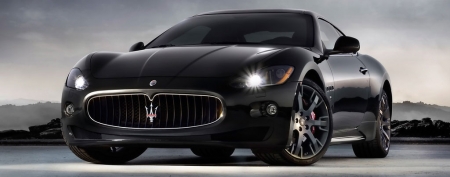
Maserati Granturismo7.7$1,245
Porsche Panamera Turbo7.0$1,134
Mercedes-Benz S-Class Hybrid11.2$955
Maserati Quattroporte8.1$935
Nissan GT-R6.1$926
BMW M38.4$866
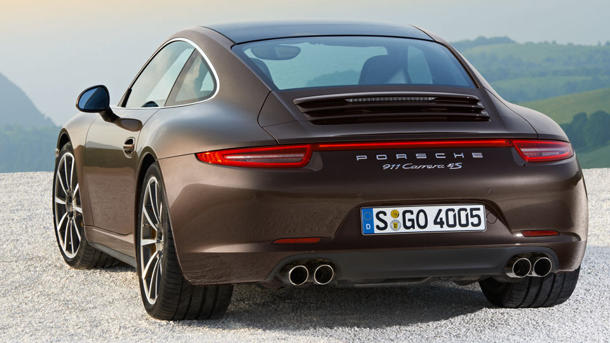
Porsche 911 Turbo Cabriolet3.5$855
Lexus IS-F10.0$852
BMW 7-Series9.7$755

Based on data from 2009 to 2011, the HLDI found that it only takes a few wrecked Ferrari Californias to spoil it for everybody. Even though California crashes are rare (only the Chevy Corvette Z06 has fewer wrecks) the average crash cost an insurance company $82,000 -- five times more any other model in HLDI's study. The rest of the list has similar high-dollar sports cars, although why drivers of Mercedes-Benz S-Class Hybrids seem to be lead foots with concrete hands escapes me.

If you're driving one of those cars, you can likely afford the insurance. What about cars and trucks that cost less than $30,000?

Top 10 Cars Under $30,000 With Greatest Crash Costs

ModelClaims/100 insured yrs.Cost/year
Mitsubishi Lancer 4WD11.3$707
Hyundai Genesis Coupe10.8$516
Suzuki Kizashi9.5$493
Mitsubishi Lancer10.2$485
Subaru Impreza WRX9.9$479
Mazda RX-89.6$465
Honda Civic Si coupe9.3$442
Nissan Altima coupe9.8$430
Honda Civic coupe9.1$405
Honda Civic Si sedan8.8$402

This list looks like a starter's garage in a racing video game, and the Lancer and Subaru WRX remain popular among the fading embers of the Fast and Furious crowd. If the lack of a Ford Mustang or Chevy Camaro in this ranking seems unusual, remember that those models tend to be bought by older drivers who wreck far less often on average than drivers still in their 20s.

On the other end of the scale are the cars that combine infrequent wrecks with cheap repairs to offer the lowest insurance costs:

Top 10 Cars With Lowest Crash Costs

ModelClaims/100 insured yrs.Cost/year
Chevrolet Tahoe6.6$134
Jeep Wrangler2.8$134
Toyota FJ Cruiser4.0$148
GMC Canyon extended cab3.5$154
GMC Canyon regular cab3.6$154
Jeep Wrangler 4-door3.2$157
Smart ForTwo3.7$160
Smart ForTwo convertible3.6$162
Chevrolet Colorado4.1$162
Chrysler 2004.8$162

What accounts for this list? Trucks in general tend to be cheaper to fix -- just bolt the body panels on and off the frame -- and are less often driven like the owner just stole it. As for the Smart ForTwo: If you were driving the smallest car sold in the United States, you'd be super cautious about getting into accidents as well. At least they won't get hit in the wallet.

The most anticipated cars for 2013

Fall is always an exciting time to shop for a new car. It marks the start of the new model year, when the latest cars and trucks begin rolling out of factories and on to dealer lots. But the 2013 model year is shaping up to be better than most, with more than 30 all-new nameplates headed to showrooms and many existing models being thoroughly reinvented.


The timing couldn’t be better for a flood of new products. The average age of cars on the road today is 11 years, creating what automakers say is an unprecedented level of pent-up demand. Many people put off replacing their vehicle over the last few years because they weren’t sure they’d have a job or were worried about keeping a roof over their head. Now that the economy is beginning to recover, credit terms have eased and consumers are feeling more confident about buying big-ticket items. As a result, the industry is beginning to pick up steam.

Automakers enjoyed their best August since before the 2007-2009 recession, selling 1.3 million cars and trucks for the month. The seasonally adjusted annualized sales rate in August was 14.52 million vehicles. So far this year, cars have been selling at a 14.3 million annualized rate. That compares with 12.8 million for full-year 2011. At its peak in 2005, the industry sold 17 million vehicles.

If it’s been a while since you shopped for a new vehicle, you’re bound to notice some changes in the showroom. First of all, you can expect a lot better gas mileage than you’re used to. There’s a broader selection of hybrids and plug-in vehicles for sale — at least one by every major manufacturer — as well as marked improvements in the fuel economy of traditional gasoline-powered vehicles. Features like continuously variable transmissions, direct injection, variable valve timing and start-stop technology all help to make today’s cars go further on a tank of gas.

Cars sold last month, for instance, averaged 23.2 miles per gallon, according to TrueCar.com, an automotive research site. That’s up from  20.3 miles per gallon four years ago.

Some of the upcoming 2013 models will give you a choice between an efficient gas engine or an electric powertrain. The 2013 Ford Fusion, for instance, has a choice of four-cylinder gas engines getting 33 to 37 mpg on the highway, but will also be available as a hybrid and a plug-in hybrid. The 2013 Honda Accord also has a plug-in hybrid version, in addition to four- and six-cylinder engines.

Your next car is also likely to be outfitted with a lot of new safety features, from blind spot detection and lane departure warning systems to backup cameras and forward collision assist, which will hit the brakes if you don’t act quickly enough. These systems take a little getting used to, but can provide an extra level of security when you’re driving. The 2013 Cadillac ATS, for instance, is packed with radar, cameras and ultrasonic sensor systems that warn you of road hazards — a gentle vibration under your thigh if you’re drifting off the road, for instance — and intervene when necessary to help you avoid crashes.

Perhaps the most welcome — but controversial — feature in today’s cars is the ability to take your music and your social life with you. In-car information and entertainment systems are the auto industry’s next frontier, but they present new issues around driver distraction that have yet to be resolved.

With so many new vehicles being introduced, Forbes culled a list of what we think are the most important 2013 models coming to market. Our list is based on factors such as breakthrough technologies, significant powertrain advances and, in some cases, the car’s importance to a company’s business model. Here, then, is Forbes’ list of the Most Anticipated Cars of 2013.


2013 Ford Fusion

Likely price: $22,000 to $30,000

Ford aims to redefine the competitive mid-sized car segment with the Aston Martin-inspired look of the new Fusion sedan, available with gasoline, hybrid and plug-in hybrid powertrains. The hybrid will get 47 mpg in the city; the Fusion Energi plug-in hybrid will get the equivalent of at least 100 mpg.

 
2013 Honda Accord

Likely price: $21,000 to $28,000

Honda's 9th-generation Accord, arriving in dealerships now, offers direct fuel injection and a continuously variable transmission for better fuel economy, and will also come in a hybrid and plug-in hybrid model next year. The new HondaLink system works with your smartphone to connect the Accord with music, media, internet apps and roadside assistance. Safety systems include forward collision warning, lane departure warning and adaptive cruise control.


2013 Ram 1500

Starting price: $23,585

The Ram pickup has a new base V-6 engine, 8-speed automatic transmission, start-stop technology and an optional air suspension, all of which contribute to its great mpg: 18/25 city/hwy. Through Chrysler's next-generation UConnect system, the Ram is also a Sprint wireless hotspot, allowing truck owners to access and update an expanding array of vehicle-related apps.

 
2013 Nissan Altima

Starting price: $21,500

Officially on sale since June, the redesigned 2013 Altima is just picking up steam in showrooms. Already the second most popular car in America, the new generation gets an impressive 38 miles per gallon on the highway. It's loaded with safety features and even sounds the horn when you've inflated the tires to the recommended pressure. Smart.


2013 Nissan Pathfinder

Price: TBA

The redesigned Pathfinder is 500 pounds lighter than the outgoing model, and gets up to 26 miles per gallon, a 30% improvement. But it remains a rugged and capable SUV, still capable of towing 5,000 pounds. Special features include a panoramic roof and a flexible seating system.

 
2013 Cadillac ATS

Price: $33,990 to $42,090

The new entry-level Cadillac makes no secret of its goal to target the world's best compact luxury cars. It's built on a new lightweight, rear-wheel-drive chassis for agility and features three engine choices. Loaded with safety technology, its standout feature is the intuitive Cadillac CUE information and entertainment system that's easier to use than most.

 
2013 Dodge Dart

Starting price: $15,995

The first joint effort by Chrysler and Fiat, the Dart is based on a sporty Alfa Romeo platform. Roomier than other compacts, it's classified by the EPA as a mid-size car. Features include an 8.4-inch touchscreen, upscale ambient lighting and customizable interiors. The Dart comes with three new fuel-efficient engines that get up to 41 mpg on the highway.

 
2013 Hyundai Santa Fe

Starting price: $25,275T

he redesigned Santa Fe now comes in two sizes. The five-passenger crossover debuted in August, and the longer-wheelbase version, with three rows and seating for seven, goes on sale in January. Three engine choices, two four-cylinders and a V6, are available, and it can tow up to 3,500 pounds.

 
2013 Lincoln MKZ

Price: TBA

Debuting later this year, the new Lincoln MKZ represents the future of Lincoln. It features impressive styling, with a distinctive retractable glass roof, and other unique features like a push-button gear selector, rear inflatable seatbelts and an intelligent system that controls driving dynamics.

 
2013 Tesla Model S

Starting price: $49,900 (after $7,500 federal tax credit)

The Model S is the second electric car developed by Elon Musk's Tesla Motors. It's available with three battery sizes, with a range of 160 to 300 miles on a single charge, and a top speed 110 to 130 miles per hour. A 17-inch touchscreen controls entertainment and information. The car seats 5 adults, plus two small children in rear-facing jumpseats.

 
2013 Ford C-Max hybrid

Starting price: $25,995

The C-Max is a compact utility van sold in Europe. In the U.S., it'll be sold only as a hybrid or plug-in hybrid. The C-Max hybrid has a 570-mile driving range, and gets 47 mpg in both city and highway driving. The C-Max Energi, coming later this fall, can go more than 20 miles on electricity alone, and will have a total range of 550 miles. Features in both vehicles include a hands-free liftgate and panoramic sunroof.

source

Just sad: The 10 wimpiest muscle cars ever

There's a dead zone in the history of performance cars between the hairy-chested muscle cars of the 1960s and the rebirth of power in the mid-1980s: the 1972–82 "malaise era," when machines were so strangled by new emissions rules that their performance levels were an embarrassment to even today's compact cars. Automakers slathered flashy paint and taped racy stripes and stickers to the hoods of the cars, but these 10 just couldn't get'er done at the dragstrip.


1978 Ford Mustang King Cobra


Ford's legendary performance car hit its nadir with the downsized Pinto-based Mustangs of 1974–1978, called Mustang II. Although this generation of Mustang came with a V-8, it was a 302 cid V-8 with a mere 139 hp. Yes, you read that right. Second-gen Mustangs pumped out just 19 more hp than you'd get from the 1.6-liter four-cylinder in today's Ford Fiesta.

But that's not the most embarrassing part of the Mustang II. That would belong to the rare one-year-only 1978 Mustang King Cobra. The Cobra name should have been kept off junk like this, but Ford had already resurrected the "Cobra" name as a sticker and spoiler package for 1976. The '78 King Cobra got some really special performance enhancements, such as a hood snake decal, even more stripes, and 13-inch "Lacy" aluminum wheels. You could buy the King Cobra in black with gold trim—an obvious attempt to lure would-be Trans Am buyers. But with a deficit of 81 hp compared with the top Trans Am, the Ford wasn't much of a threat. Thankfully the all-new 1979 Fox Mustang would kill the King Cobra and mark the return for Ford performance.


1974 Pontiac GTO

The '64 Pontiac GTO is widely regarded as the first muscle car. The performance formula was simple: Drop a big 325-hp 389-cid V-8 (348 hp with Tri-Power carburetion) into a relatively small Tempest chassis and you've got a seriously quick car. The GTO went from option package to becoming its own model, and horsepower officially peaked with the 370-hp Ram Air IV V-8. (Unofficially, the big 455 High-Output (HO) of the early 1970s reportedly reached the 400-hp plateau.)

The GTO name became an option package for the Le Mans in 1973 with the top motor, a detuned 455 V-8, making a mere 250 hp. In 1974 the devastation hit a new low. Pontiac made the GTO tag an option on the Ventura, the brand's lame version of the Nova. Yuck. Under the hood was a 350 cid V-8 rated at just 200 hp. And aside from the shaker hood scoop and GTO lettering, it looked just like your grandmother's car.

The move flopped, and Pontiac pulled the GTO nameplate. We wouldn't see it again until the brief 2004–2006 revival.


1977 Chevy Monza Mirage

Chevy's downsized Monza coupe of 1975–1980 was based on the bones of the Vega. It was meant to be a smaller, sporty, and less-expensive alternative to the Camaro. And like just about every other "sporty" American coupe of this era, it had little performance under the hood.

In 1977 Michigan Automotive Techniques Corp offered a solution—at least a visual one. The company developed a package that included wide-body fender flares, spoilers, and striping that turned an ordinary Monza into the Monza Mirage. The Mirage looked cool, no doubt about it, aping the style of the popular IMSA Camel GT racing Monzas at the time. But performance? An anemic four-cylinder was standard. If you wanted a V-8, the only one available was the 5.0-liter you could order in any Monza. Talk about a dog—it made just 145 hp. And if you lived in California, that V-8 cranked out 135 hp—even less than the Mustang King Cobra.


1976–1980 Plymouth Volare Road Runner


Few cars from the muscle-car explosion of the 1960s carried a stronger performance rep than the Road Runner. The 440 Six Pack and Hemi cars dominated on the street and strip. And the Road Runner–based Plymouth Superbird became a legend on Nascar tracks in 1970 and a rare (and valuable) sight on the street today.

But in the mid-70s, Plymouth affixed the Road Runner name to the lowly Volare midsize coupe. The standard engine was a wheezy 318-cid V-8 with just 160 hp. An optional 175–195 hp (depending on the year) 360 cid V-8 made the Volare Road Runner a bit quicker, but it still was no match for the 1960s and early 1970s cars. Worse, the Plymouth Volare and its Dodge Aspen brethren were prone to rust (as seen here), prompting a major recall in 1977.


1982 Pontiac Trans Am

The third-generation Pontiac Firebird was a stunner. Its sleek lines made the old 1970–1981 second-gen 'Bird look like a relic. The shape set a new standard for aerodynamics. The bodywork, especially in Trans Am guise, was tasteful and clean. When it debuted, everyone forgot about the poorly performing 1980–1981 Turbo Trans Ams. The '82 even got a starring role in Knight Rider as KITT (Knight Industries Two Thousand), seen here.

Well, a fresh redesign with cutting-edge aero doesn't necessarily equate to performance under the hood. In fact, for 1982 the Firebird's standard engine was a 2.5-liter 90-hp four-cylinder. That's right, a four-cylinder engine in a Firebird. Yes, there was a V-8 option. But if you selected the four-speed manual, that 5.0-liter Chevrolet-sourced V-8 pumped out just 145 horses. The "Cross-Fire Injected" 5.0-liter V-8 was available with an automatic only, and though it was torque-rich, this motor didn't produce more than 165 hp.

The bright spot was just two short years away. By 1984, a 190-hp 5.0-liter HO motor replaced that Cross-Fire Injected engine.


1980–1983 Dodge Mirada CMX


In the 1970s the personal coupe was hot. These large two-door coupes were packed with comfort and a big V-8 under the hood, but because they were based on a full-size chassis, there was plenty of room to stretch out. And they were quick.

By the early 1980s, demand for big coupes was waning. But Dodge had one more up its sleeve—the Mirada. Although it was nominally the successor to the Charger, the Mirada shared nearly nothing with that legendary ride.

The Mirada was underpinned with the same chassis as the Diplomat sedan—the cars cops used at the time. But there wasn't much cop-spec goodness under the Mirada. The CMX top model promised performance, especially when you saw those larger 205/75R15 radial tires. But in reality the 360-cid V-8 under the CMX's long hood made just 185 hp. The Mirada died in 1983 as sales of all Chrysler vehicles were in freefall, making room for Lee Iacocca's more fuel-efficient and quicker turbocharged front-drive K-cars.


1980–1985 Chevy Citation X-11


GM finally introduced its first downsized front-wheel-drive cars in the 1980 model year with the X-body cars, which included such legends as the Oldsmobile Omega, Buick Skylark, Pontiac Phoenix, and the Chevy Citation. The Citation got the X-11 performance package, which turned out to be more than just an average sticker and spoiler package. It came with an HO 2.8-liter V-6 rated at 135 hp, wider 215/60R14 tires, and a "sport" suspension system. That wasn't too bad for a small car in the early '80s. And to our eye, the X-11s actually looked pretty cool too.

The problem was, even though the ideas behind the sporty version of the Citation were okay, the Citation itself was not. The car gained a wide reputation as a poorly built pile of junk needing numerous factory recalls. Perhaps worst of all, Citations had a tendency to lock their rear wheels under hard braking, causing the cars to spin. Yikes.


1978 AMC Gremlin GT


By 1978 AMC's funky Gremlin had been around for eight full seasons. The rear-drive hatchback had lost its top motor—a lame 120-hp 304-cid V-8—a year earlier. So, to boost Gremlin sales in its final year, AMC developed the GT.

Here was a pokey little Gremlin made up to look like real performance machine. It had fat fender flares, spoilers, body-colored bumpers, and wide 14-inch wheels with outline white letter tires. On the inside, GT's had an aluminum-look dash and more. But under the hood of this macho Gremlin, you'd find the same torque-rich but horsepower-deficient 4.2-liter inline six-cylinder used in Jeep CJ-7s. Not exactly perfect for a performance car.


1980–1981 DeLorean DMC-12

Because of the DeLorean's iconic starring role in Back to Future more than a quarter-century ago, it's still impossible to separate the image of the DMC-12 from the reality of its performance. But despite its pop culture superstardom and enduring appeal, the DeLorean was definitely not a quick car.

Sure, John Z. Delorean's American supercar was penned by famed Italian designer Giugiaro and wore flashy stainless-steel body panels and sexy gullwing doors. It's chassis showed promise too, as Delorean contracted Colin Chapman of Lotus to develop the suspension. But peer beneath the engine cover and you'll find the joint-venture Peugeot–Renault–Volvo 2.8-liter V-6 producing just 130 hp. Pretty anemic for a car that looked like the future and cost $25,000 at the time. In fact, in a 1981 Car and Driver comparison test, the Delorean was the slowest of the five sports cars tested.

source

Jaguars RB Jones-Drew ends 38-day holdout, reports

Jacksonville Jaguars running back Maurice Jones-Drew has ended his 38-day holdout — without a new contract.

Jones-Drew arrived at the facility Sunday morning and chatted with teammates before meeting with coaches.

ESPN first reported Jones-Drew's decision.


"Just shared some love with (at)Jones_Drew32 in the locker room," Jaguars running back Rashad Jennings posted on his Twitter page. "Glad to see you back - Let's work brah!"
The NFL's leading rusher in 2011, Jones-Drew skipped the team's entire offseason in a nasty contract dispute. With coach Mike Mularkey able to fine him up to $30,000 a day — plus $60,000 for a three-day, mandatory minicamp — Jones-Drew could be out $1.2 million this season. He is scheduled to make $4.45 million in 2012 and $4.95 million next year.

Jones-Drew wanted to renegotiate the final two years of a five-year, $31 million deal that paid him nearly $22 million the last three seasons. Owner Shad Khan and general manager Gene Smith refused, not wanting to set a precedent of paying players in the middle of lucrative deals.
Things got somewhat tense after Khan said publicly that Jones-Drew's absence "doesn't even move the needle." Khan also said his message to Jones-Drew is that the "train's leaving the station. Run, get on it."

Those comments apparently didn't sit well with Jones-Drew.
"Maurice wants to play for an organization that wants him and for an owner who respects him and values what he brings to a team — on the field, in the locker room and in the community," said his agent, Adisa Bakari.

Coming off a career year, Jones-Drew wants to be one of the NFL's highest-paid backs. His average salary per year ranks behind Minnesota's Adrian Peterson, Tennessee's Chris Johnson, Philadelphia's LeSean McCoy, Houston's Arian Foster, St. Louis' Steven Jackson, Carolina's DeAngelo Williams and Seattle's Marshawn Lynch.

The 27-year-old Jones-Drew signed his deal in 2009, before rushing for at least 1,300 yards in three consecutive seasons. He had a league-best 1,606 yards on the ground in 2011. Not only has he seemingly outperformed his contract, Jones-Drew is the face of the franchise and probably the only player on the roster known outside small-market Jacksonville.

The Jaguars, though, feel like they paid him based on the expectation that he would flourish as a starter after spending the first three years of his career splitting carries with Fred Taylor. The team isn't enamored with paying a running back into his 30s, especially one who takes as many pounding hits as Jones-Drew does. Plus, the Jaguars have missed the playoffs in each of his three seasons as the starter.

Jones-Drew is entering his seventh season. He has 6,854 yards rushing, 2,473 yards receiving and 74 total touchdowns. He carried a career-high 343 times last season, averaging 4.7 yards even though defenses knew he was the focal point of Jacksonville's offense.

Hottest paint color? Not silver anymore

Silver was the most popular exterior car color in America for nearly a decade. But while it remains beloved by automotive designers for best showing off a car's styling, its unstinting argent reign was finally overthrown this year. By white. According to Sandy McGill, BMW Designworks' lead designer in color, materials, and finish, this is Steve Jobs' doing. "Prior to Apple, white was associated with things like refrigerators or the tiles in your bathroom. Apple made white valuable."


Valuable, yet boring. So while the rise in white's snowy stock may be good news for the luxury market — white is high maintenance, thus luxurious — it's a pale palliative for those of us with a bit more pigment in their palette. Fortunately, our expert interviews and analysis reveal that more enticing colors are emerging.

Light blue's ascension is connected to environmental wellbeing: clear skies, clean water. Crisp oranges are migrating from the world of high-end outdoor equipment. New paint technology may finally allow fashion's passion for fluorescents to flow from the runways onto the highways. And, as always, the smart money's on gold: as its price and profile have skyrocketed, so has its demand as a coating.

But the most enticing color trend, from our perspective, is the return of brown. After all, what could be more compelling to unicorn-riding Rainbow Brites like us than the hue derived — as any child left too long at an easel will readily demonstrate — from combining every shade in the visible spectrum?

As recently as 2008 articles and experts were prognosticating the "extinction" of brown as an automotive exterior color: it was too rooted in the malaise of the 1970s, it blended in too well with the scenery, it lowered resale value. Even the aesthetically-bereft American Automobile Association (AAA) danced on brown's loamy grave, claiming, in their Car and Color Safety dispatch of 2004 that, "brown, black, and green cars [are] roughly twice as likely as white cars to be involved in crashes resulting in serious injury."

But, like every cinematic hero, the very moment of brown's alleged eradication presaged its incipient resurrection. According to paint giant PPG's Global Color Manager, Jane Harrington, brown's latest uptick is based in its ability to convey stability and comfort, as well as the kind of authenticity that consumers— especially luxury consumers — seek. "Think of the experience of good coffee, good chocolate, great pieces of wood," Harrington told us, referencing the entire field of upscale umbric goods. "You're seeing it across the crafts industry: more genuine materials, something that has longevity. The handmade quality people are looking for in luxury."

High end car makers like Mercedes, BMW, Mini, Porsche, Rolls-Royce, and Bentley have all begun investigating what brown can do for them, with each marque offering at least two — and in the case of Bentley, a full half-dozen — earthy shades on their contemporary offerings. But we're also starting to see brown trickle down into the lower ends of the automotive marketplace. Ford now offers its Taurus sedan and Escape SUV in Kodiak Brown, as well as proffering a caramelly Golden Bronze dip on its best-selling F-150. And Toyota, though famous for producing cars that are both literally and figuratively beige, has also began to polish the mahogany, offering a quartet of browns on models like the Venza, Avalaon, RAV-4, and Tacoma (though, ironically, you cannot purchase a Sienna in brown.)

But brown's delightfully filthy insurgency isn't based solely on its connection to the composted topsoil used to grow your heirloom radishesm or the Kopi Luwak coffee beans pooped out by a Sumatran civet cat and roasted for your artisanal espresso. Nor is it merely surfing the aspirational wave a few coats may bring to the mass-market. It's also fueled by a deep-seated fondness for the past.


Or, at least that's what Alex Nuñez thinks. As Senior Automotive Editor at Consumer Search, and Weekend Editor at Autoblog, he is an industry expert. But it's his role as founder of Facebook's Brown Car Appreciation Society — which now includes nearly 600 members, mainly automotive writers, analysts, and pundits — that catalyzed our interview. "I think it's a nostalgia thing for guys our age. I'm 40, and we grew up at a time when you had all these brown cars in active use," Nuñez said. "Maybe it's that a lot of people who are in decision-making positions in the car industry are of that age, and this stuff is sort of subliminally ingrained as a feel good thing — these browns and earth tone colors."

Experts like Jane Harrington and Sandy McGill are hard at work tracking the next big incipient color trend — bronzes, with their patinaed implication of history and refinement; aluminum flakes that make metallic paints more silky; even digital OLEDs that can display anything, like an automotive iPad. But when we asked Nuñez if there were other color trends he was stalking, he didn't hesitate. "Not really." He is interested only in seeing brown deepen its fecund reign. "I'm disappointed that you can't order a Mustang Boss 302 in brown, or a brown Camaro. So there's still opportunity for expansion."